Is it our turn next? When will it happen? Are we ready for it?

While browsing through newspapers the past year or so, I’ve begun to feel that our delicate little world has joined the “disaster of the month club.” No kidding – let’s think about it. We can start a few years ago and discuss what hurricane Katrina did to New Orleans and what the earthquake and tsunami did to Japan. We can look at the fires last year in Australia, and the flooding in Haiti. And even the recent bombings in Boston. Well I could go on and on, but I’m sure you get the idea.

OK – so what we need to ask is, “Is it our turn next?” We can probably rule out a tsunami, and we get very few hurricanes passing this way. But the professionals in the area of earthquakes tell us we are long past due for a good shaking around here.

Let’s be pessimistic for a line or two and talk about what a really bad quake would do to us here in the Alive Magazine readership environment.

First of all, we can cross off electricity and phone lines. What the shake didn’t topple the falling branches, and for that matter, the uprooted trees took care of. If the quake was large enough, we can probably cross out these conveniences for at least a week, and probably longer.

Now, the younger generation immediately thinks of cell phones with a bit of arrogance. But I am told that the excessive traffic that results in a disaster such as an earthquake pretty well jams those lines, and they aren’t going to work.

Next we need to look at the damaged buildings and the toppled book cases that manage to land on people. Our first instinct would be to call the fire department and police for help in dealing with these upended structures and/or trapped neighbors. History in other disasters informs us of several facts. One, only a limited number of these helpers is available, i.e., only the ones on duty. The ones not working in these departments are helping in their own area. Two, the few on duty are overwhelmed by the sheer number of problems which have developed. Result – limited assistance here too.

Injured must be cared for on the spot or transported, and access to proper medical care will be limited. Speaking of transportation, these nice solid overpasses above our freeways may or may not hold. Some are bound to collapse. You’re not going to be able to zoom around in your BMW, if that’s your plan. There will be traffic jams and certainly limited movement.

There probably will be fires. Those gas lines to your house may rupture, and a spark could ignite them. There are groves of trees just waiting for this to happen.

Getting hungry and thirsty? Better have a bottle or two of H2O and an outdoor grill because you may need them for a week or so. Drinking pool water will make you sick.

I could go on and on, but I guess by now you’ve got the picture about what could happen. In fact, you may be asking, “Is anyone doing anything about this possible situation?”

Ah ha – I’m glad you asked. The answer is “YES” – a very strong powerful yes.

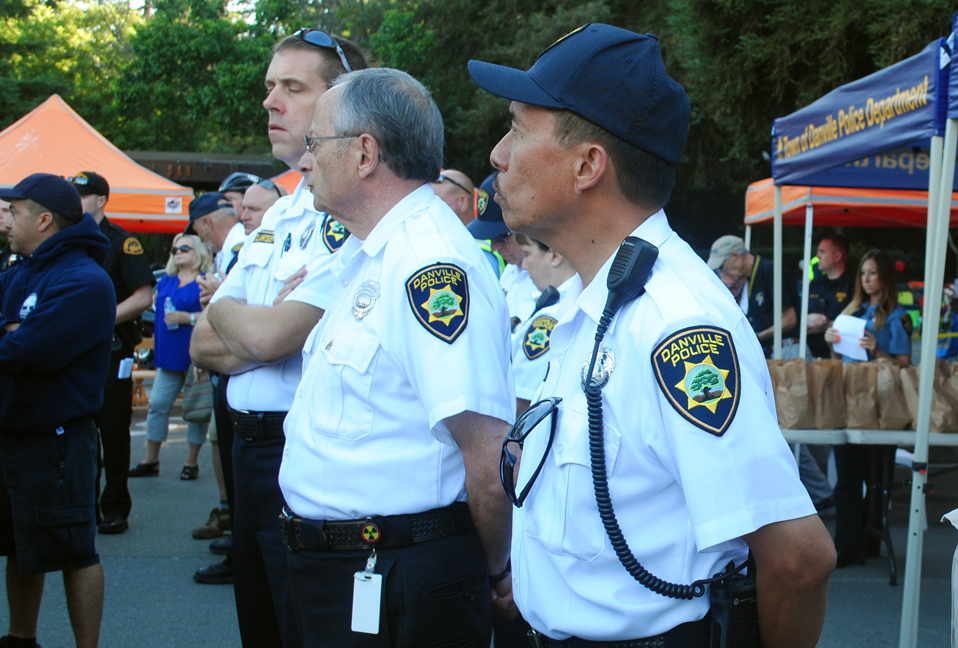
Over the past several years a program has been developed under the federal government’s Department of Homeland Security. This program is called Community Emergency Response Team – referred to by the acronym CERT. The program this group encourages varies a great deal around the country. California is one of the more effective areas with the Bay Area being good, and the Martinez to Livermore area being one of the best.

In case of a disaster, one of the most important needs is communication. In our area an efficient network has been established with individuals communicating through minimum range radios called FRS, to group stations with more powerful radios called GMRS, and a network of HAM operators who report to a central command station located, for example, in fire or police headquarters. This will allow the professionals to get a clear overview of the damage and direct their limited resources to the areas of the most need. In addition, they can give professional and informed information to the outside world.

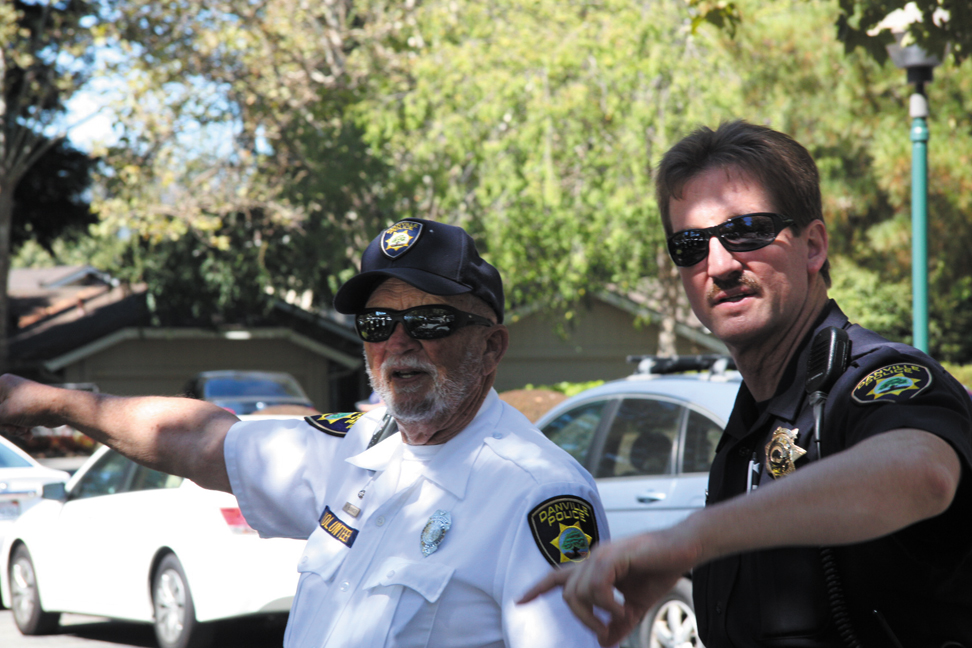
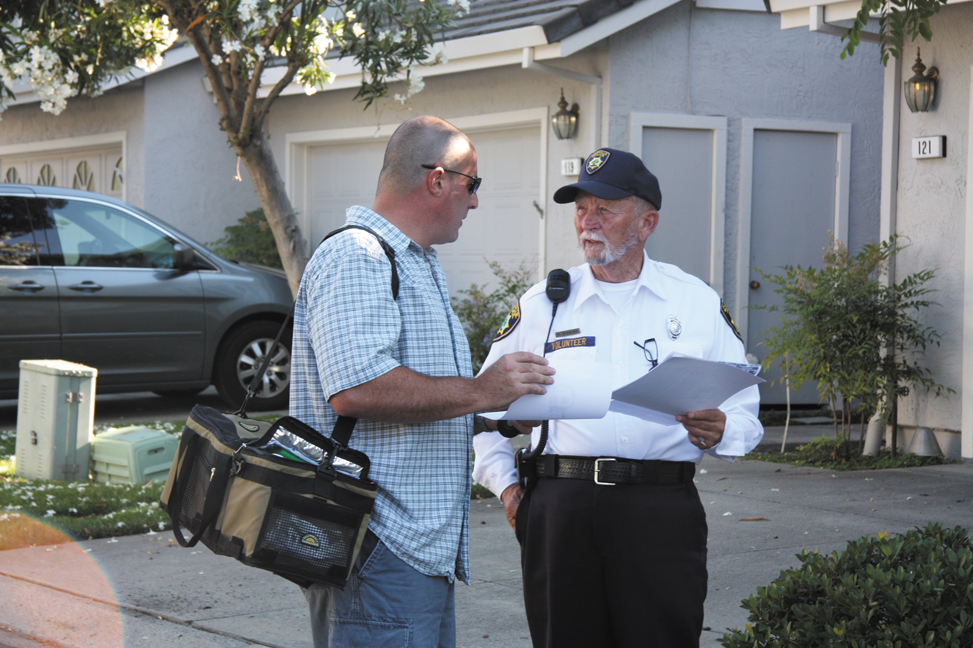
The basic information coming from the field via the FRS transmissions will be supplied by a large group of trained volunteers. These volunteers have been attending classes and participating in training drills for most of the last five years. This training includes other items as well as radio communication.

Basic search and rescue instruction is also included. This includes medical triage, neighborhood safety, i.e., how to turn off gas lines in houses, proper techniques in extracting victims and perhaps, most important, how to set up incident command centers.

These command centers help create order out of chaos. They act as neighborhood centers where trained volunteers can properly assess what should be done first. In addition, they act as gathering places for the injured so that medical teams can efficiently deal with the wounded. In many cases, essentials such as blankets, medical supplies, and tools are stored in these locations.

The trained CERT volunteers, along with the trained professionals, make a formidable network – prepared tohandle any area disaster should one occur.

CERT classes are being held regularly and are open to anyone wishing to volunteer. These classes cover a wide range of subjects. All of which are applicable not only for use in disasters, but can also help in everyday living. They act as a refresher in first aid and remind you of simple acts you can perform to make your home a safer place. Accidents and emergencies happen to us all, and preparedness will help you to deal with them effectively. Even better, they may help you avoid them.

If you are interested in volunteering to become a trained CERT member you can log onto www.bereadysrv.com. You can also go to www.firedepartment.com and click on the Community Outreach section to sign up for CERT classes.


Share

Back in the USA

It has probably occurred to you by now, as you thumb through your personal issue of ALIVE magazine, that our illustrious editor is focusing this issue on the United States in the 1960s and early 1970s. Even more specific, I am told, he is glorying in the movie representing that era, namely American Graffiti.

 This gives me an opportunity that I have longed for since the year 2008 when I first was published in ALIVE with articles titled the same as my book – Stamps In My Passport. I’ve selected offshore venues and shared adventures with you that I’ve had in those “far-away places with strange sounding names,” always including a passport stamp. But, now is the time! There is one recurring stamp in my current passport, as well as the five retired passports, that fills pages and pages. I now have an excuse to share a story or two about that stamp. You guessed it – the good old United States of America stamp that tells everyone “I’m home!”

My first story is about a run-in I had in the late 1970s with one of those stern but polite customs agents. In those years I made several trips each year as a gemstone courier. A business I was associated with purchased emeralds, rubies, and sapphires from miners all over the world. These stones were then stored in banks in that country – awaiting a pickup. There were drops in Dar es Salaam, Tanzania on the east coast of Africa, and rubies smuggled out of Cambodia by the Khmer Rouge and stored in Chanthaburi, Thailand. I was fortunate enough to be able to pick up these bags of rough stones and bring them back to the United States. This meant going through a different line at the San Francisco airport. Sitting quietly in a small room off to one side, I patiently explained to this United States agent how I came about having these imported items. Always had to assure him I was not laundering money for some evil drug cartel. Even though I always thought I had an honest face, apparently these guys felt I looked guilty. Eventually they let me through, and I always got a stamp in my passport. Those were exciting times for me.

Another one of my fond memories about my United States passport stamp occurred in Singapore. The logic of the US policy at that time has escaped me over the years, but for decades it was in effect. To get a US passport one needed to apply in San Francisco, but for some unexplained reason one could add pages to an existing passport at the US embassy in Singapore. On one of our trips, we realized that we had only a page or two empty and decided to take advantage of this opportunity. The US Embassy was close to our hotel, so we walked to the fortress-like structure – surrounded by a huge iron fence. The spit and polish marine allowed us to pass, and another marched us to the head of the line, while others awaited an audience. The lady behind the desk was helpful, and in a short time we had a fatter passport, with twenty four new pages. When we got back to the United States, the immigration officer noticed the added pages and jokingly said “Let me christen your new pages with a good old solid US passport stamp.” I have heard that Singapore no longer does this – so the experience will remain unique.

It’s apparent that over the years the use of passports has changed. Back in the late 1960s and early 1970s we visited relatives back in Michigan. We used to drive across the Ambassador Bridge or through the Windsor Tunnel from the US to Canada. Back then, no one seemed to care a great deal about a passport. In fact, during a number of those years, I didn’t even own a passport much less get a stamp. Little did I know at the time that not getting a stamp in my passport would become such a big deal in my life. Missing that experience would mar a record of years of travel in and out of our most joyous and prosperous country. God bless you, America!


Share

Back in the USA

It has probably occurred to you by now, as you thumb through your personal issue of ALIVE magazine, that our illustrious editor is focusing this issue on the United States in the 1960s and early 1970s. Even more specific, I am told, he is glorying in the movie representing that era, namely American Graffiti.

This gives me an opportunity that I have longed for since the year 2008 when I first was published in ALIVE with articles titled the same as my book – Stamps In My Passport. I’ve selected offshore venues and shared adventures with you that I’ve had in those “far-away places with strange sounding names,” always including a passport stamp. But, now is the time! There is one recurring stamp in my current passport, as well as the five retired passports, that fills pages and pages. I now have an excuse to share a story or two about that stamp. You guessed it – the good old United States of America stamp that tells everyone “I’m home!”

My first story is about a run-in I had in the late 1970s with one of those stern but polite customs agents. In those years I made several trips each year as a gemstone courier. A business I was associated with purchased emeralds, rubies, and sapphires from miners all over the world. These stones were then stored in banks in that country – awaiting a pickup. There were drops in Dar es Salaam, Tanzania on the east coast of Africa, and rubies smuggled out of Cambodia by the Khmer Rouge and stored in Chanthaburi, Thailand. I was fortunate enough to be able to pick up these bags of rough stones and bring them back to the United States. This meant going through a different line at the San Francisco airport. Sitting quietly in a small room off to one side, I patiently explained to this United States agent how I came about having these imported items. Always had to assure him I was not laundering money for some evil drug cartel. Even though I always thought I had an honest face, apparently these guys felt I looked guilty. Eventually they let me through, and I always got a stamp in my passport. Those were exciting times for me.

Another one of my fond memories about my United States passport stamp occurred in Singapore. The logic of the US policy at that time has escaped me over the years, but for decades it was in effect. To get a US passport one needed to apply in San Francisco, but for some unexplained reason one could add pages to an existing passport at the US embassy in Singapore. On one of our trips, we realized that we had only a page or two empty and decided to take advantage of this opportunity. The US Embassy was close to our hotel, so we walked to the fortress-like structure – surrounded by a huge iron fence. The spit and polish marine allowed us to pass, and another marched us to the head of the line, while others awaited an audience. The lady behind the desk was helpful, and in a short time we had a fatter passport, with twenty four new pages. When we got back to the United States, the immigration officer noticed the added pages and jokingly said “Let me christen your new pages with a good old solid US passport stamp.” I have heard that Singapore no longer does this – so the experience will remain unique.

It’s apparent that over the years the use of passports has changed. Back in the late 1960s and early 1970s we visited relatives back in Michigan. We used to drive across the Ambassador Bridge or through the Windsor Tunnel from the US to Canada. Back then, no one seemed to care a great deal about a passport. In fact, during a number of those years, I didn’t even own a passport much less get a stamp. Little did I know at the time that not getting a stamp in my passport would become such a big deal in my life. Missing that experience would mar a record of years of travel in and out of our most joyous and prosperous country. God bless you, America!


Share

Stamps In My Passport

Let me toss a challenge your way. Suppose you have friends from another country visiting you – and they don’t speak English. And suppose they ask you, in the language the two of you share, to give them a few words or phrases in English that will get them by here in the United States, should the two of you get separated.

Come on, you can come up with a few great words that are used all the time around here. I could give you a few examples but, better yet, I’ve come up with a collection you can use while you are on one of your excursions around the world.

Let’s start off with the German language spoken in Austria and Germany. When a local sitting next to you in a beer garden or on a train, strings together half a hundred words (and you haven’t the slightest idea of their meaning) how do you respond? Simple, you smile and say “Ja Ja.” That’s pronounced yah, yah, and it’s especially impressive if you say them together quickly.

“Bitte,” pronounced the same as it’s spelled, is also useful. It lets you pass in a narrow hallway, and it excuses you for disobeying some custom with which you are unfamiliar. Or it implies the person you are talking to isn’t speaking clearly or loudly enough.

OK, enough about German. Let’s move on to Mandarin, the language used in much of China – “Ni Hao,” pronounced nee how. This phrase seems to cover about all situations. You can use it as a greeting, or I’m told as a farewell. It sort of substitutes for our own use of the word “hi.” It can also be used to inquire about one’s health.

It is friendly but must be used with caution. If pronounced incorrectly it might mean “your mother looks like a horse.” Maybe you ought to avoid this one – in fact, I’ve actually talked myself out of it.

“Ciao,” pronounced chow, is the universal word spoken in Italy. Once again, it can be used in almost every occasion. When a friend approaches, “Ciao” is ok. When they leave, it is also appropriate. Sit down at an outdoor café in Rome, the waiter greets you with the word. Once again, a universal expression covering many situations.

In Australia, it is convenient to mix in the word “mate,” pronounced more like “might,” when dealing with the local citizens. It works best if added at the end, or near the end, of any personal question. Such as, “How much do you charge for these, mate?” Or, maybe “How you doin’, mate?” For some reason it softens the tone of your words.

Another excellent Australian phrase is “No worries.” Or, even better, “no worries, mate.” If you haven’t enough money to pay for a lunch, the phrase “no worries” buys you a little time. Also if someone jostles you in an elevator, “no worries” brings a smile.

The Swahili equivalent of “no worries” is “hakuna matata.” Not exactly, but pretty close. Walt Disney made this expression popular in The Lion King, but nevertheless, it works well in Africa, mostly in Kenya and Zanzibar. Your car needs work, “hakuna matata.” No tables available in a restaurant, “hakuna matata.” Your guide appears to be lost, “hakuna matata.” Hey, it’s Africa, and not everything works perfectly or is on time. What a great way to calm you down.

In Nepal, the people use the word “Namaste” regularly. Once again, you can use it for just about everything from a greeting, to a farewell, to thank you.

In fact, this might be a good way to end my article this month. NAMASTE!

Share

Stamps in My Passport – Germany

0213Stamps-Passport-BerlinA little history reminder before I get into my story. After World War II, Germany was divided into two countries. For simplicity, they were generally referred to as East and West Germany. The West prospered under Allied control, while the East floundered under Soviet rule.

Migration from east to west reached two and a half million people and to stop this flow, a wall was built between the two countries, being completed in August 1961. The wall stood until November, 1989 when it was finally torn down.

A gate existed in this wall through which foot and vehicle traffic could pass under supervision of United States troops in the West, and German guards known as VOLPO in the East. At this site in October 1961 United States tanks lined up on the west side and Soviet tanks lined up on the east. The notoriety of this gate excited the imagination of generations in spy novels, as well as in reality. Its name conjured up intrigue, mystery, and suspense.

We first visited Checkpoint Charlie in early 1990. The wall was being demolished, kids were jumping over the huge blocks which were tumbling down, and tourists from all around the world were chipping pieces off the fallen wall for souvenirs. I must admit I joined the chippers.

Generally, the houses on the east side were quite close to the wall, but a patch – I would estimate it to be about fifty meters in width – lay to the west. Signs were posted by the East Germans that anyone traversing this field would be shot. The area was called “the killing field” for apparently if a person did manage to scale the wall, he/she was shot before reaching the other side.

We walked peacefully along the avenue known as Unter den Linden, through the famous Brandenburg Gate, and around the Reichstag. We were very fortunate as one of the days of our visit included the last “changing of the guard” of the Soviet troops in East Berlin.

At Checkpoint Charlie, I spoke in my childish German to a VOPO soldier. He told me that he would soon be relieved of his duties. As a hat collector I bought one of his fore-and-aft caps for five US dollars. It was his hope that he would be employed as a police officer in the United German Republic, but he was skeptical. He pointed out a number of spray-painted signs on and near the wall which read “Keine Stasi amnesty” which basically lobbied against amnesty for those soldiers who tried to stop migration into the west.

It is now twenty-two years later and once again we visited Berlin and found ourselves drawn to that intersection where Checkpoint Charlie existed. My, my – what a change!

In the center of the Friedrichstadt neighborhood a rough copy of the little hut used by the United States troops was located. On either side of the hut stood several “actors” in military uniforms waving the flags of the various countries they supposedly represented. All around it stood small kiosks offering fake military outfits, hunks of stones, various badges, and other miscellaneous souvenirs for sale. There were crowds snapping photos, buying junk, and doing what tourists are expected to do. It was a far cry from our previous visit.

To my mind, the major difference was the vast amount of buildings that had been erected. The “killing field” was now fully covered by brick multi-story buildings, going up some ten to twelve stories. The old Café Adler – which had been the place where agents, double agents, and triple agents waited and watched – was now a large restaurant serving beer and sausage at outdoor tables.

We enjoyed our visit to the new Berlin. We visited the standard historic places and added the recently-built ones, which included the eerie, claustrophobic, narrow walkways of the Holocaust Memorial. We marveled at the sections of the wall which have been left standing and into which has been incorporated an excellent history of this period.

But, I wish we had not seen Checkpoint Charlie. All the romance and intrigue that John Le Carré and other novelists had built is now gone. I much prefer my memory.

Share

Interesting Golf Experiences

OK – I’ll admit it. I do love to play golf as do a great number of my friends. Now participating golf is one thing, but rehashing the game is another. Sitting in the clubhouse reliving the game is almost as much fun as the round itself. Here those frustrating missed puts can be placed into perspective along with those long straight shots that we remember so well.

So, where is this leading? On a number of my overseas journeys, I have taken time off to play a round or two, and in so doing I’ve come across a number of very interesting experiences on golf courses. Please indulge me a bit and let me tell you about a few of these adventures and the reason they reside in my memory bank.

* * * * * *

Most Unique Circumstance: We arrived in Windhoek, Namibia in early fall, just as the beautiful blue jacaranda trees were in bloom. The tour group that we had joined had us acclimatize ourselves after the long flights by staying two days in Windhoek at – of all places – the Windhoek Country Club. What a great place! I shot a modest round, somewhere under one hundred, in one of the most unforgettable locations I could imagine.

   * * * * * *

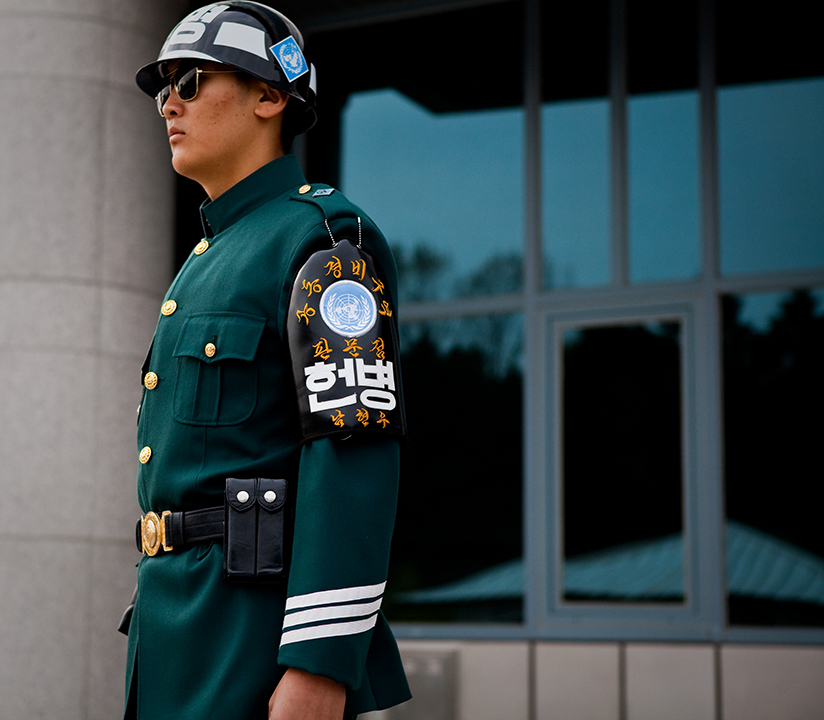
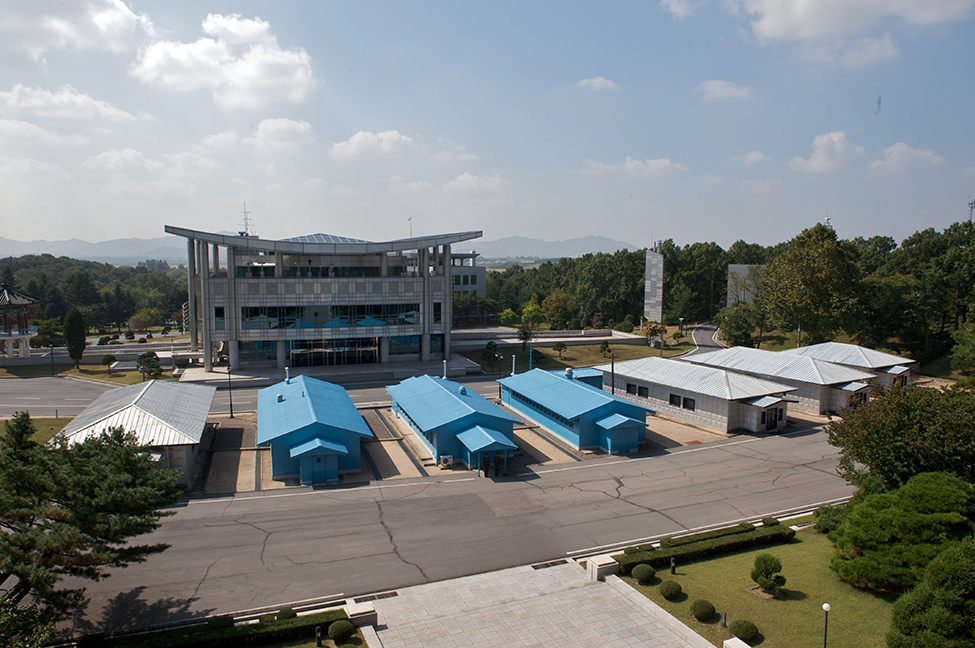
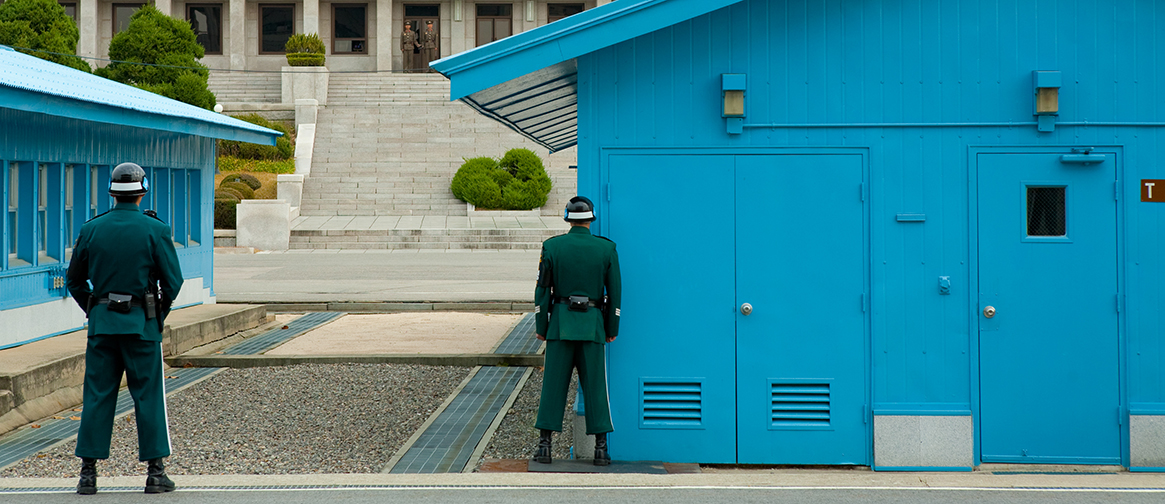
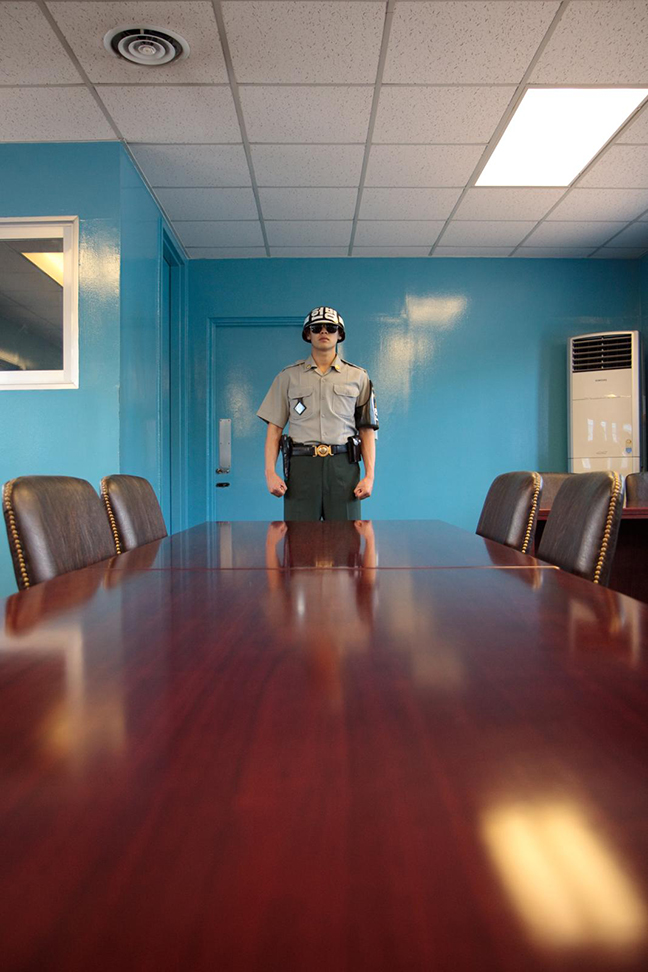
Most Exciting Round:  While spending time in Seoul, Korea, we went up to the DMZ (Demilitarized Zone). Here the American and South Korean troops faced the North Korean Army on a daily basis. But boys must be boys, and on the base in South Korea sat a neat little nine hole golf course. The third hole ran along the north side, adjacent to a double fence which separated the two countries. On the hole was a sign which read,

“Danger. Do not retrieve balls. This area is mined.” No hole to slice on, believe me.

* * * * * *

Very Different Course: Dubai has embraced a number of Western concepts over the past few years. Golf is one such love, along with horse racing. These two “sports” are combined in the huge stadium just outside of the city proper. Here the course sits inside the racing oval, but with a unique twist. The temperature in Dubai exceeds one hundred degrees Fahrenheit most days, and native vegetation is sparse. But, in this oval, golf is played at night, under lights, on beautifully-kept grassy fairways. Of course, there are numerous sand bunkers.

* * * * * *

The Strangest Course: On the King’s Highway outside of Kathmandu and past Jorpati, sits the Royal Nepali Park. Just before the park one finds a neat little golf course. The fairways are rough and could easily be compared to a cow pasture, but oh those greens. Actually they are misnamed. Here they are just plain dirt, with no grass. The hole sits in or near the center of the green with the flag announcing its location. On my visit each such “green” had a greens keeper who would come out and rake the turf flat after each foursome had passed.

* * * * * *

The Scariest Experience: We spent two great days at the Mt. Kenya Safari Club. This course sits right on the equator in east Africa. The course is a beautiful one but fenced on all sides to keep the golfers in and the wild beasties out. On the fifth hole I pulled a drive and watched my ball bounce off the fence, still staying in bounds but caught in a tangle of vegetation. As I was rooting around for the ball, I heard a snort and saw on the other side of the fence a mama warthog with two babies. She politely informed me to stay on my side of the fence, which I wisely did, and played another ball.

* * * * * *

The Most Trusting: While visiting the Isle of Man, we stayed in the capital city of Douglas. Now Douglas has a beautiful course wandering through the hills along the ocean shore. The views are spectacular. I couldn’t resist the challenge so took a cab out to the course. The caddy master was the only person around. I paid him the fee, rented clubs, bought a pack of tees, and a sleeve of balls. Still no one arrived. As I started out the door, the caddy master said,

“When you’re through, leave the clubs in the bathroom if I’m not here. I’ll leave it unlocked. Have a nice round.”

Never saw another soul on the course or in the clubhouse. True to form he was nowhere around when I finished. Door was unlocked, so I left the clubs as he suggested. Fastest round I’ve ever played.

Share

Stamps in My Passport – Architectural Curiosities

Over the past five years or so, I’ve written monthly articles for Alive. Almost all of the stories have centered on people or places that have stimulated my imagination. In retrospect I find, for the most part, that I have neglected a number of categories. For example, art and music have shown up in only a few of my tales. Except for a recent article, the very important topic of food has somehow avoided a story. And, of course, there are other equally-neglected topics.

I am about to remedy one such omitted subject. This month I will share with you architectural curiosities that either impressed me or caused me to marvel. Because of the size of the list I’ve developed, I will limit my observations to structures of recent, i.e., maybe fifty years ago or so, construction. I hope you’ll bear with me on this.

When I look at my list, I find that emerging countries dominate the contents. For example, I have the People’s Republic of China down twice. The one most bizarre structure of all is the Beijing headquarters of Chinese government-run telecommunications, a Rem Koolhas design. This twin tower is connected by an apparently off-balance triangle. It seems to defy gravity. My first impression was that of an unfinished building. Would be scary to work in this out-of-kilter office.

The other structure in Beijing that is on my list is the 2008 Olympic Pool building, designed by Weaire-Phelan. It has generated the nickname of “The Water Cube” and rightly so. When viewed from afar it appears to be a building made of pure H2O. The feeling inside augments the outer view. You are convinced that you are frozen in a giant ice cube.

Another nation which has a few unique structures on my list is Dubai. Actually, one is a building – the other an entire development. The building is the Burj Al Arab Hotel. Its towering height alone is impressive, but to see celebrity guests arriving at their rooms on the twenty-eighth floor, via a helicopter pad somewhere up there, is beyond belief. Wish I had the money to enjoy the thrill of airport to hotel room via a chopper, although it might be a little frightening for the faint-hearted. The hotel is built to resemble the sail of a dhow, a type of Arabian vessel. And, the two “wings” on the outside form a mast. The view at night is particularly stunning because of the glittering lights on these “wings.”

The Palm Islands Real Estate Development, also in Dubai, is beyond belief. Areas of the Arabian Gulf were filled in with rocks and sand to resemble huge palm trees with individual homes grouped along their fronds. The view from above staggers the imagination. The plan is to have over one thousand waterfront homes on these three “islands.” Who can afford this?

No list of architectural marvels would be complete without the Sydney Opera House. That collection of giant clam shells, framed by the Harbour Bridge, is recognizable world-wide. I have great memories of our visits there.

For a great laugh, and just a “good” feeling, I must include the Tate Modern Gallery in London. It doesn’t have a chance of winning any architectural awards, but crossing the Thames on the Millennium Bridge, seeing the grand sculptures in the yard, and lying on the floor looking up at the mirrored ceiling some three stories above leaves an indelible impression and a smile. I chuckle every time I think about my visit there.

For sheer size one must add in the Taipei Tower – all one hundred and one floors of it. At one time this was the tallest building in the world. It just goes up and up. Watching as it appears to move with the wind with its airplane wing-shaped height makes me want to stay on the ground. We visited Taipei during a typhoon and marveled that such a structure could withstand those winds. I am told each of eight sections contains a mass damper which acts as a pendulum. Don’t ask me how this works – it just does.

Well, that’s my top seven. I didn’t get a stamp in my passport for viewing the Golden Gate Bridge, nor could I include the marvelous recreation of bomb-destroyed cities in Europe. Come to think of it, maybe those are worth a visit. Think I’ll go.

Share

Stamps In My Passport: Being Vegetarian

Like converted smokers, vegetarians can at times be a bit trying. They repeatedly remind you of the evils of red meat, and the effects of the white marbled fat running through it. Admittedly vegetarians come in various shades. Extremists avoid any product not grown, calling themselves vegans. Others are okay with eggs and cheese. A few are vegetarians in name only (choose your own definition) occasionally eating a bit of chicken or fish.

Now it’s one thing following these principles in your own kitchen, but traveling presents a whole new dimension. I know this to be a fact – I’m married to one. Let me tell you about a few of our escapades.

One of the more awkward periods occurred a few years back while traveling in the Baltic states. We were picked up by a robust female guide upon our arrival in Tallinn, Estonia. She was a throwback to the communist days where I am sure she was a weight lifter. She stood well over six feet and watched two hundred pound fly by years ago. She suggested we get acquainted over dinner at a local food shop, her choosing of course, and we followed along.

“I’ve ordered for us all,” she announced as a hearty beef goulash soup, with floating gobs of grease arrived. Barb stirred but didn’t eat. I got in a couple of spoonsful, smiled, and quit. She drained her bowl.

The entrée was a slab of beef, mashed potatoes, and a pile of canned peas – all swimming in a thick brown paste. I assumed it was gravy. Barb stirred, rearranged, but did not eat. Our guide devoured it all and as she was sopping up the remnants with a huge slice of bread said,

“You two sure don’t eat very much, do you?”

This feeding frenzy went on for ten days through Estonia, Latvia, and Lithuania without a trace of greens or fresh veggies. My guess is there are very few vegetarians in the Baltics.

In fairness, we did load up at breakfast with eggs, cheese, and bread. A couple of nights we snuck out and ate a pizza or a bowl of pasta with no trace of meat.

Vietnam was a different story. Here every eating place listed a host of vegetarian dishes, and Barb was in her glory. But, alas, a hunk of soft tofu on each plate does get a little tiresome. After eating tofu for three meals a day for ten days, Barb tried to ignore it at a restaurant in Saigon. To make matters worse it jiggled in an unappetizing way. In an effort to help this poor misguided tourist, the waitress came over and politely cut the hunk into small pieces, demonstrating to Barb the proper way to enjoy this delicacy. Didn’t work.

There were other very embarrassing moments for me over the years because of this eating preference. Perhaps the most awkward occurred at a delightful breakfast buffet in Perth, Australia. The chef was preparing eggs on a large, universal griddle. Unfortunately he was also using this same griddle for bacon, sausage, and ham. Barb ordered her eggs, but asked if there was a virgin spot on the cook-top which was not, to her mind, contaminated with all that animal residue. The chef looked up and politely told her to go to $&*) – well, he didn’t really care about her tastes. The discussion that followed is unknown to me. I got out of there fast.

One of the major difficulties experienced by vegetarians has faded into obscurity – namely meals served on airplanes. For years the tiny hot trays placed before you on long flights had traces of meat. Enjoyed by most, but avoided by vegetarians. Alas, these endearments are now gone, and getting anything but pretzels and a soft drink costs a pretty penny.

I could go on and on with this subject, but I expect by now you’re gotten the idea. This column will be enjoyed by some, denounced by others, but I hope you all identified with it.

Share

Stamps in My Passport

During my early school years I mastered the rules of measurement called the English system—inches, feet, miles, etc., for length, and pints, quarts, gallons, etc., for liquid volume, and ounces, pounds, tons for weight. Then in high school I was introduced to the Metric system. As I grew older it was easier to comprehend but did require my use of parallel equivalents. I’m never quite sure which system to use for what. But even this confusion did not properly prepare me for the complexity of mastering a foreign currency. I’ve been embarrassed, yelled at, profusely thanked, and laughed at any number of times because of some simple misunderstanding of the local means of exchange.

When Barb and I go on a trip I make sure I have a little bundle of ones and fives in United Stated dollars on me. I started this practice a few years ago to save me some confusion. Whenever we arrive at a hotel in a new country I pretend I haven’t had time to pick up local currency and sort of apologize, as I tip the porter in United States currency. It wasn’t always like that. There have been a few times in my past where I made a fool of myself trying to look like I knew what I was doing. I either shorted the local or paid for a year of his college education.

One balmy evening in Bangkok, Thailand I settled on a fare on one of the three-wheeled monstrosities they call tuk-tuks. As neither the driver nor I spoke one another’s language, the negotiation was done by holding up fingers and then either nodding or shaking one’s head. I accepted the price of 300 baht only to find at the end of the ride the tuk-tuk’s operator had agreed to take me to my destination for 3000 baht. A local bilingual citizen at the destination settled our dispute by pointing out to me that my offer would hardly pay the driver the price of a bottle of soda.

On another occasion, I felt an obligation to tip a porter in India. I selected some paper currency I thought about equal to a dollar and handed it to this helpful young man. His eyes widened in total disbelief. He quickly grabbed the paper and showed it to the other porters standing nearby. They in turn began jabbering away at a serious level. After a few seconds, the porter came back and returned about half of what I’d given him. He explained my error to me in a language I was unable to understand. We both seemed pleased with the final results, and I resolved never to calculate the tip that I had given. It might embarrass me.

When Barb and I flew into Bali, Indonesia years go we headed directly for the ATM in the airport. We were going to spend five days there so our hope was to get enough local currency to tide us over. If we got more than we needed, we could always apply the extra to our hotel room.

The ATM machine obliged us by having the operating instructions in English, so we proceeded quickly to the point where you choose the amount you wish to withdraw. There were a lot of zeroes at the end of each number, so we picked a nice mid-sized withdrawal. We later found out we had received the equivalent of $8.00. Our bank charged us $3.00 for the privilege. All in all, not too practical.

So there you have it—my reason for using United States dollars whenever I can. My explanation may seem weak, but in the end it proves to be quite practical.

Share

Stamps in My Passport – Kenya

A week or so ago I had an opportunity to visit a local zoo. Now, I love animals. One of the blessings of my current residence is that it is populated with a large variety of native wild animals. I wake up and go to sleep with five or more deer staring in my window. Several times I have seen this herd tear off in terror as a coyote approaches. Skunks and raccoons are common visitors. Unfortunately, they devour my garden and eat all the fruit I grow, but nevertheless I enjoy their presence. I love the wide variety of birds who visit, and I swear regularly at the gophers and moles that travel my property under ground. A fox lives next door, and I see him slinking about. Why all this preamble? To set the stage for my most precious of all animal sightings – in Africa.

The Masai Mara Game Reserve in Kenya is composed of a huge flat plain which covers an area from horizon to horizon. It also goes by the name Serengeti – depends on if you approach it from Kenya or from Tanzania. Higher hills surround it, and it serves as a home for an untold number of animals – both in quantity and in species. It is named for the native inhabitants whose warriors are legendary – the Masaai.

Here in Kenya’s wildlife reserve there is a role reversal. Instead of us homo-sapiens watching animals in a fenced and restricted area on the Masai Mara, we human bipeds are enclosed in vehicles. Our freedom is limited to the mobile cages we travel in. The enclosures may be busses or more often trucks, with rows of seats conveniently spaced on their beds. But nevertheless, these vehicles restrict us. Outside the area of our confines is as dangerous to us as it is for an animal in the zoo to escape into our environs.

(A little sidebar on this restriction. When one of the vehicles breaks down or has a flat tire, the other vehicles in the area are called in and a circle is formed around the inoperable van. This situation always reminds me of the western movies where the covered wagons “circled” when the Indians appeared. I wonder which defense came first – here or there?)

At any rate, on our visits to this magical place, we traveled about, watching giraffes at water holes – a great sight. Their legs were spread wide so they could reach the water with their long necks. Elephants moved from one feeding ground to the next, with the younger, weaker ones in the center, surrounded by the majestic bulls. Wildebeests grazed on the short vegetation, their tails in constant movement swishing the flies away.

At one point during a game drive, our driver became quite excited. He had just heard from another guide who had discovered a most unusual find. We hurried the twenty or so kilometers between us and came upon a wonderful sight.

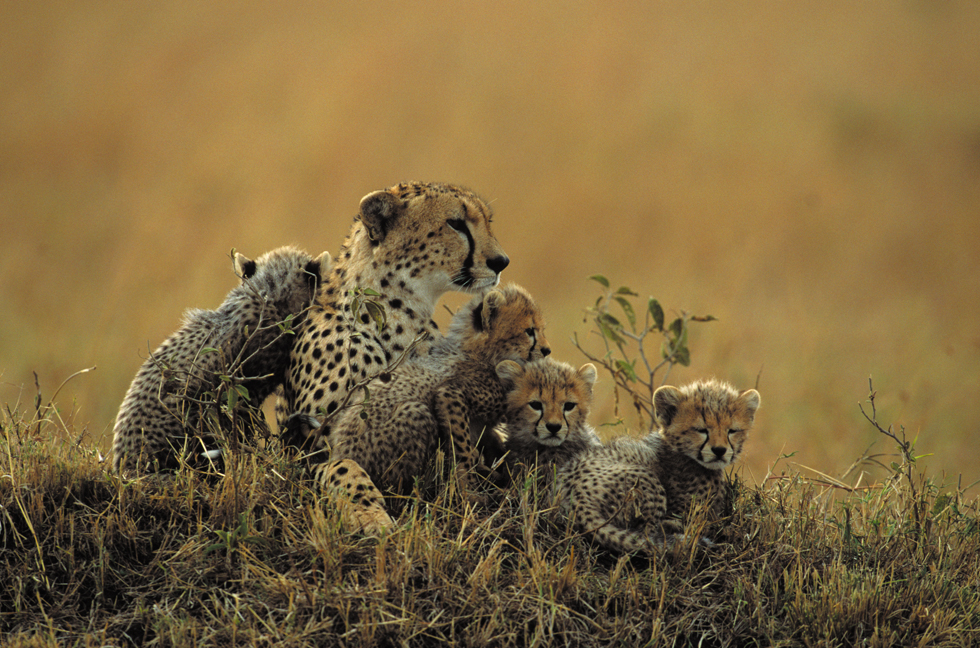
Lying still on the grass in the shade of an acacia tree, there was a mother cheetah. Near her scampered four of the cuddliest little cubs you could imagine. The babies resembled medium-sized house cats and were playing and rolling about. They clawed away at one another – absorbed in a game of “bash your brother,” which was interrupted periodically by a visit to the local deli where they enjoyed a quick repast. Mom looked on with an expression of pure joy – a smile on her face. She seemed unfazed by the audience she had collected and contentedly licked the playing foursome. Her loud “purring” was the only sound in this magical setting.

I would love to have gotten out of my cage and hold one of these little tykes, but believe me it would have been a disaster. Mom was no pussycat!

We are all proud parents, watching our children grow and play, and we are protective of them. I felt a strong kinship to this relaxing cat. A different species of course, but certainly a shared inner feeling of joy watching over our own breed. Alas, all tiny offspring grow up and become adults, but they still reside in our memory as playful cubs.

Share