You will get the Job. Wherever you are at this moment, quietly bow your head, breathe and say to yourself, “I will get the job. Brain, understand this.”
Go ahead and say it, even though it may sound silly. Studies from the University of Kansas and the University of Alaska, Anchorage found that children who were talked to the most have strikingly higher IQ’s than children whose parents didn’t talk to them very much. Try 150 IQ versus 75! One of simplest ways to raise intelligence is to talk.
In the same way, words still carry weight. Oh, they sure do. Just think of the last time a family member cussed you out; or a stranger decided to whisper obscene profanity and give some sign language to you as your were driving in your car. You may not have heard the “words” but you felt them.
“Life and Death are in the power of the tongue!” Proverb.
Coaching individuals in this market is the BEST! Why? Because I get to separate the “wheat” in one’s life from the “chaff” that has been growing as you await the job of your dreams.
Now you may be saying to me, “Coach Ron, I’ll take any job.” Well, that what we must correct. That’s been the problem for most people their entire life. They have been saying those words. They heard their parents, teachers, mentors—whoever—using just that sort of negative language. What I want you to understand is that Words do have power! They have molded and fashioned you in a way. You may be paying for negative words heavily right now. I hear people all the time saying things like, “I’m just trying to make ends meet,” or, “I really don’t want to do this, but…”
The answer:
STOP SAYING WHAT OTHERS SAY ABOUT YOU!
START SAYING WHAT YOU WANT
Speak about the job you want. This is not magic trick, it’s a neurological thing. In short, your brain, much like an infant’s, adapts to words. Words frame your thinking and thinking is what you speak. What you think about is what you speak about. So in order to get the job of your dreams, you better be thinking on things that bring you the results you want. It’s that simple.
And, the words you speak are a matter of heart. Whatever is in your heart in abundance is what is going to come out of your mouth. Fill your heart with the truth about your passions! Your love for people, skill sets, passions, likes, flavors, music—all those things you start to dance over when your heart is touched.
As I coach companies, I advocate that employers pick out the wheat from the chaff. I coach them to discern between employees that are there for a “pay-check” versus those who have had a “heart-check.” Once an employer hears words come out of your mouth that have been touched by your heart, the JOB is YOURS!
Your assignment: Get a tape recorder or use your phone to record yourself talking. Do it in various settings. You will be shocked what comes out of your mouth. Life and even death. Next month More on get the Job of your dreams. Email me. You’ve got what it takes- GO FOR IT!
Ron Kardashian
Ron Kardashian is a life coach, fitness expert, educator, conference speaker, author, national television and radio personality, and NSCA-certified strength and conditioning coach. Kardashian was one of America’s first life coaches. In 1994, he founded Kardashian Life Coaching & Personal Training and has since inspired hundreds to reach their full physical, mental and spiritual potential.
Kardashian has been twice nominated as Personal Trainer of the Year. He has been an honored speaker for the National Strength and Conditioning Association. Considered a “coach’s coach,” he has empowered executives to operate at peak performance; personally, professionally, and most important , spiritually.
Ron also heads a 501 (c) 3 non-profit corporation that is relentless in its efforts of bringing optimal health to people of all walks of life. This organization’s mission is to fight obesity and related diseases on a global scale. Across the globe, Kardashian’s unique approach has garnered amazing results, making him a powerful, voice of change for professional athletes, CEOs, political leaders, and clergymen of every age, religion, and creed. Ron lives in California with his beautiful wife, Tia, and two children.
Joint pain is not an inevitable sign of aging, nor is it always a sign of a condition like arthritis. Instead, joint pain is most often a sign of chronic inflammation or hormonal imbalance. When a person learns to solve these underlying problems, most find their joint pain and stiffness significantly improve, or disappear altogether.
What’s inflammation got to do with it?
The healthy immune system triggers the inflammatory response to deal with sporadic threats like injury or infection. But in many, the inflammatory response is constantly on a low “simmer.” This chronic, low-grade inflammation prevents cell regeneration and repair and gradually tears down tissues — including those in your joints.
Chronic inflammation can be caused by a diet that’s too high in refined carbohydrates and sugars and too low in essential fatty acids. A high-carb diet promotes prolonged high levels of insulin, which disrupts cellular metabolism and spreads inflammation. Undiagnosed food allergies or sensitivities also contribute to inflammation when those foods are eaten. Many people with chronic inflammation also suffer from digestion problems due to an inflamed digestive tract.
Stress is also an issue. Cortisol, the hormone released in response to stress, works as an inflammatory agent. Sustained stress — the kind most of us experience — can cause inflammation to spread like wildfire.
Joint pain and hormonal imbalance.
Many of our female patients first report joint pain when they are approaching menopause. The hormone shifts that occur during this transition, especially fluctuating estrogen levels, can impact how our joints feel. Because estrogen normally has an anti-inflammatory effect in the body, falling estrogen levels also exacerbate the symptoms of chronic inflammation.
For women whose joint pain is related to hormonal fluctuations, phytotherapy can gently and effectively support hormonal balance and, for some, help lessen joint pain. Phytotherapy works by using specific herbs/plants to create balance within the body.
The natural approach to joint pain
There’s a lot you can do to relieve your pain, starting with solving the underlying cause. A few simple dietary changes, like reducing refined carbohydrates and sugar, can make a dramatic difference in your joints. We recommend eating more fruits and vegetables, which contain natural anti-inflammatories, and adding a high-quality multivitamin to fill in any nutritional gaps. An elimination diet or lab tests can help identify any food allergies or sensitivities.
For our patients with joint pain, we recommend a high-quality omega-3 fatty acid supplement. Essential fatty acids are very effective at fighting inflammation, but it’s almost impossible to include sufficient omega-3’s in the average diet. You can increase your omega-3 intake by eating wild, not farmed, fish caught in the United States; these will be low in toxins and mercury.
Lifestyle changes like stress relief and moderate exercise can help regulate cortisol levels and reduce your inflammatory burden. A gentle but regular exercise program will also help you maintain a healthy weight and prevent excess wear on your hips and knees.
Explore natural therapies. Class IV Laser pain relief naturally breaks the inflammatory cycle and releases endorphins (natural pain killers). Natural Medicine, Chiropractic, Acupuncture and Massage Therapy also can be useful in natural pain and inflammation reduction.
We’ve had great success helping people solve the causes of their joint pain. If you suffer from chronic pain it is worth your while to spend some time figuring out which of any number of factors are contributing to your pain — and which combination of therapies will help heal it. The good news is — you can do it without drugs, and you don’t have to give up any of the activities you love!
Dr. Niele Maimone, DC of Align Healing Center in Danville, CA has been active in natural health & wellness for over 10 years. For more information or to set up a consult call 925.362.8283 or visit www.alignhealingcenter.com.
That is, unless your competing at the World Long Drive Championship. These guys hit long balls for money. How long and for how much? Well next time you see 16 year old Clayton Valley High School Junior, Dominick Mazza, roaming the halls at school, ask him. He may have to tell you twice because he is modest, doesn’t talk real loud, and because the first time he tells you he drove it 436 yards, you will need to hear it again. Unfortunately for him, he cannot accept any money but his dad will tell you that it’s just for fun.
I started working with Dominick a few years a back. When I first met him I thought he was another kid who played a lot of sports and I would need to improve on his fundamentals. Turns out that not only does he like golf but he throws an 87 mile per hour fast ball and is left handed as well. You might say there are plenty of coaches out there that are lobbying hard for him to stay focused on baseball.
So what’s his secret? Well he is pretty strong. He has big hands, weighs about 180 pounds and my guess is, stands about 6 feet 2. Dominick generates tremendous club speed and knows how to use leverage. He recently had his club speed checked and I happened to be there. His club speed was in the high 130’s which would be one of the highest on the PGA Tour. That would send a ball about 340 to 350 yards in the air. That’s what we call, “Bubba Watson long!” He is pretty much a “natural” at hitting it far.
My job is to help him control what he’s got. We have adjusted some things, ironed out a wrinkle here and there but basically, it’s all him. The shafts he uses are so stiff that you can’t flex them. He hits it solid and has wonderful balance. Oh, probably should mention that he is pretty good at the game of golf, too—he won a Junior Tournament this summer which proves he just doesn’t hit it long.
How lucky was his 436 yard drive that registered to be the second longest drive ever recorded at that grid? No luck at all, considering the fact that he qualified for the finals with five of his six balls traveling 400 yards or more! He put on a clinic and “shock and awed” everyone there, including his dad.
Dominick will be traveling next month to compete with the world’s best. You can bet they will be watching him closely. After all, he is still a growing boy!
Q. How would I go about preserving the seeds produced from my vegetable plants, and use them for next year’s planting?
A. Collecting and saving seed from one year to the next is not all that difficult, however, not all vegetable seeds are created the same. Seed saving makes perfect sense with the open pollinated or heirloom types of vegetables but not with the hybrid varieties. It’s all about genetics. Open-pollinated varieties are self or cross-pollinated by bees and/or the wind. Their seed produce plants that are very similar to the parents. Their seed carries on the qualities of the parents, or “breed true” as the saying goes. This is not the case with hybrid varieties. Humans cross two different specific parents to develop the F1 hybrid. Their offspring produce a new, uniform seed variety with specific characteristics from both parents. For example, a breeder may choose to cross two tomato varieties to make an F1 hybrid that exhibits the early maturity of one parent and a specific disease resistance of the other. The unique characteristics of a hybrid are very uniform but only in the first generation, F1. Seed saved from these varieties have unpredictable characteristics the following year. You’ll need new seed and/or plants each year to duplicate these varieties. The seed packet, catalog description, or plant label should indicate if a variety is an open pollinated or hybrid variety. Other clues include: F1 or F2 appears in parentheses after the name, it is a hybrid. If the letters “cv” are visible, it means the seeds are from a “cultivated variety” and thus are not suitable for seed saving.
Seed is collected from healthy plants with mature fruits that are dried as soon as possible. A seed may not be mature at the same time a fruit reaches its mature color, so be patient. Tomato seeds and others are contained in a gel-like material. You separate the seed from the gel by placing the mixture in a jar of water, and stirring it a few times a day until it ferments. Once it ferments, the seeds should drop to the bottom of the jar. The liquid is poured off and the seed is collected for drying. One method used is to spread the seeds out on paper towels, which are placed in a warm, dry and well-ventilated location for about a week. After the seed is dried, you remove any pulp that may remain on the seed before packaging the different varieties in envelopes with a label. The envelopes are stored in an airtight glass jar, such as a pickle or mayonnaise jar with a packet of silica gel. The silica gel removes any moisture that develops. The rule of thumb for storing seed from one season to another is to keep the seed cool and dry. Ideally, they are stored in a refrigerator; otherwise, the garage will do. You sow the seed in flats next February for planting into the open ground in April and May.
Buzz Bertolero is Executive Vice President of Navlet’s Garden Centers and a California Certified Nursery Professional. His web address is www.dirtgardener.com and you can send questions by email at dirtgarden@aol.com or to 360 Civic Drive Ste. ‘D’, Pleasant Hill, Calif. 94523
Fourth of a four-part series dealing with retirement.
Update: The enjoyable path of our fictional hero, Rob, continues as he “repots” himself after retiring from full-time business activities and discovers SIRs.
Well, it has been over two and a half years now since Rob packed his belongings at work and headed home. In some respects it’s hard to believe. He still remembers, talks about it, and even occasionally hears from some of the old gang. But, the freedom he now enjoys more than overcomes his desire to return to work.
One of the major contributions to his retirement enjoyment has been the membership in SIRs (Sons in Retirement.) Admittedly he approached joining with a bit of trepidation, but that is now long gone. He plays golf with the branch almost weekly and has gone on several week-long outings put on by the State SIR organization. He’s back to playing cards several times a month as well. His wife has joined him and other SIR couples on morning walks and day-long exploratory trips to local venues. Although they have not gone on any of the international trips as yet, the possibility of their joining the travelers remains strong.
Best of all, Rob, has made a number of new friends. Similar to work, he found some guys he identified with and a few with which he had nothing in common. Here he was allowed to choose and soon became quite close to a number of the men. He sits with them at lunch and often stays for a drink with them after golf.
But now Rob was faced with a new dilemma – one which required some thought. He was asked, by the nominating committee, to become an officer in his branch.
Rob had joined SIR purely for selfish reasons. He had been lonesome and at loose ends, and the organization had remedied that. The fact that there were about twenty thousand SIR members and one hundred and twenty plus branches in northern California was of minor interest to him. He focused on his own branch of about one hundred and twenty members and didn’t bother about the details.
But now Rob began to feel a little guilty about his early selfish reasons. He had received a great deal of pleasure from SIR; and, being the kind of person he was, he realized he needed to return the favor and give something back. And, becoming an officer in his branch might solve that need.
He had often wondered early on how SIR could do so much without membership fees. How could they put on so many events at a reasonable price? Then he learned there were no paid employees or positions. All of this work was being done by volunteers, and now he was being asked to give back a little of what he had been given. Frankly, it seemed more than fair to him.
As you’ve probably guessed, Rob became an officer, and, well, the rest is history. I’ll leave it to you to finish the story.
Q. Tom, I plan to list my home for sale in the next 30 days; we live in an upscale community – the value of my home is $1,500,000 +. I have seen some real estate firms advertise their ‘luxury home’ or ‘estate home’ sales marketing expertise; is that kind of exposure beneficial to me as a seller or is it just marketing ‘smoke & mirrors’?
It can be either, depending on which company and/or agent you work with. A select number of real estate firms have experienced agents in the upper-end or luxury sector of the market and you will most likely benefit from the exposure they can provide for your home. Agents who specialize in the luxury markets tend to have detailed information on past and current sales, usually have ‘inside info’ on upper-end homes that were privately bought and sold (not on the MLS), a database of business contacts with upper-end clients who fit the ideal target buyer profile and sometimes an exclusive affiliation with an international luxury marketing brand that provides a bit more advertising sizzle. So, how do you find out which agents and companies have the best luxury marketing resources? Pay attention to the “for-sale” signs on similar homes in your community (especially if a SOLD rider is hanging at the bottom). Conduct internet research and outright ask the agent you are interviewing which and how many $1,000,000+ buyers & sellers they have represented in the last 12 to 24 month period. If your home is more ‘Nordstrom’ than ‘Wal-Mart’, you’ll want to align yourself with a real estate company that caters to affluent clientele who can afford a fine home in your upper-end price range.
Q. I am a buyer and I feel a bit uneasy providing a big ($20,000) deposit check at the start of a home purchase transaction for fear that I may lose the money if I later back out for a legitimate reason. At what point does the seller get to keep my deposit?
I’m not an attorney but as a licensed real estate broker I can assure you the seller cannot retain your deposit money until it is proven that you, the buyer, have breached the contract. And it takes a lot to do that. Among other safeguards, the standard California Association of Realtors’® (C.A.R.) purchase contract has three major contingencies: 1) loan, 2) appraisal, and 3) inspection. Upon releasing or waiving those contingencies, you ‘firm up’ the contract. If the buyer (you) walks away from the transaction after that, the seller may then lay claim to the deposit.
Q. Nearly every agent I speak to regarding selling my home wants to put a lockbox on or near my front door so that agents may access the house key inside it when I’m not home. Is a lockbox a smart thing to agree to? Is it safe?
In the vast majority of instances, electronic lockboxes are a very secure way of providing access to a home. Many sellers are not home (nor should they be) when agents show the property to qualified buyers—and that’s what it’s really all about—getting the right buyer in to see the home. So, allowing agents access by utilizing a state-of-the-art lockbox is a wise thing to do. Keep in mind, only agents can access the house key in the lockbox, agent ‘access codes’ are updated weekly as a security precaution and each entry to your home is recorded electronically, to the minute, should your agent need to identify who was in the home for any reason. One last feature: most newer electronic lockboxes automatically ‘lock down’ every night about 9 pm, until the next day, to keep everyone, including agents, out of the properties in the later evening & night time hours providing peace of mind for all.
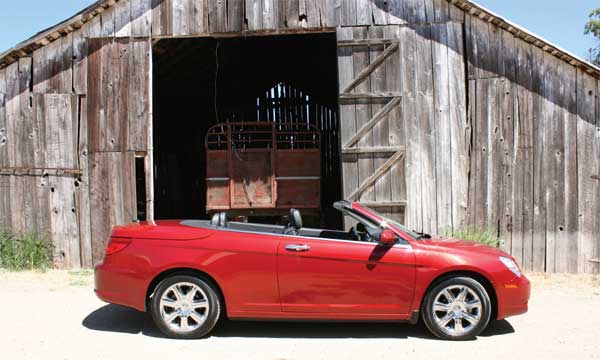
Living in California where the sun always shines (at least that’s how the brochure reads), it only makes sense to have a car where you can drop the top and let your hair fly or your scalp tan. OK, I know what you are thinking; convertibles aren’t safe and can easily be broken into with the slice of a knife through the fabric top. Well, Chrysler gave us an option typically only seen on more expensive cars: a retractable hardtop. So, when the weather permits, you can pour on the sun tan lotion, crank up the Beach Boys and cruise free and easy in the basking sun. If the weather gets rough, with just push a button and you’ll feel the comfort of steel over head. Now that’s a resourceful convertible!
If you are looking for a reasonably priced convertible that seats four adults (most fit two adults and two kids – six-years old and younger), then your choices are very limited. Chrysler’s offering comes in the form of the 2010 Sebring convertible. In 2008, Chrysler introduced an all-new Sebring convertible. The 2010 Sebring comes with two power roof options—cloth and a retractable hardtop—which distinguishes it from its competitors. For 2010, the Sebring convertible receives a refresher course with a restyled hood, new instrument gauge cluster, new aluminum and chrome-clad wheel designs, driver and front-passenger active head restraints and four-wheel ABS is now standard.
The 2010 Chrysler Sebring convertible is available in three trim levels: LX ($28,600), Touring ($29,960) and Limited ($34,705). The LX comes standard with a 2.4-liter 4-Cylinder motor and a 4-speed automatic transmission plus a cloth power soft top. The Touring trim has a 2.7-liter V-6 engine paired with a 4-speed automatic transmission with overdrive and power cloth soft top. I tested the Limited which is equipped with a 3.5-liter high output V-6 motor and 6-speed automatic transmission with overdrive, AutoStick and power retractable hardtop.
Here are some stats on the three engine choices on the convertibles: The 2.4-Liter 4 cylinder delivers 173 horsepower and 166 foot pounds of torque and is rated at 20 mpg City and 29 mpg Highway. The 2.7L V-6’s HP jumps to 186 with 191 ft.lbs of torque while producing 18 mpg City and 26 mpg Highway. The high performance 3.5L V6 cranks out 235 horses with 232 ft. lbs. of torque and earns MPG numbers of 16 City and 27 Highway.
I should note that the Sebring is also available as a sedan with two trim options: Touring ($20,870), and Limited ($22,865). Both models come standard with the 2.4-liter, 4-cylinder motor complemented with the 4-speed automatic transmission with overdrive and produce 21 mpg City and 30 mpg Highway.
Styling of the Sebring has always been a debatable topic. I think the most recent changes on the third generation Sebring deliver an attractive four-passenger convertible. The new changes to the hood are cleaner and elegant and the car looks great with the top up or down. The retractable hardtop separates into three pieces and folds neatly and quickly into the trunk. The trunk, as with most retractable hardtops, has a cage that must be in place for the top to collapse into. The purpose of this cage is to ensure that other items in the trunk are not in the way of the hood and so that the hood doesn’t crush any items in the trunk. Even with the top down you do still have a fair amount of space, but with the top up there is 13.1 cu. ft. of cargo space.
The interior has also been a hot spot for criticism in the past with complaints of cold and hard points and bland styling. The 2010 Sebring interior is nicely integrated with metal and wood trim and a tight fit and finish. There are still some touch-points that could be a bit softer, but overall the interior was very comfortable. The wood treatment in our Limited model was beautiful. The center dash rises up in a V fashion housing climate controls and a media center for radio, navigation, and more.
The front seats were comfortable and the driver’s seat also had a manual lumbar adjustment. The rear seats in the convertible lose almost four inches verses the sedan, which limits the rear legroom. If you have a tall driver, I would suggest placing a child passenger behind them as there is not enough room for adult size legs at that point.
Behind the wheel of the 2010 Sebring convertible was enjoyable especially with the top down. Yes, I am a sun lover! The Sebring is not a sports car and doesn’t try to be one either. It delivers a smooth and comfortable ride. The convertible is actually 400-pounds heavier than the sedan and if you were to drive them back to back it would be noticeable in the handling and performance. No doubt, however, the Sebring still drives well. Since I had the 3.7-liter V-6 in my test vehicle the performance aspect was fine.
Room for improvement:
Limited rear leg room
Cool Features:
Retractable Hardtop
DVD rear-seat entertainment system
The 2010 Sebring has a number of safety features including multi-stage front airbags, seatbelt pretensioners, torso protecting front side airbags, antilock brakes, electronic stability with traction control and brake assist ($425) and rear-seat child safety seat anchors and tethers.
In Summary – The 2010 Chrysler Sebring convertible is available with multiple engines and top selections. I am confident you can find a combination that works for you. The retractable hardtop provides both the fun of the open air and the security of a sedan. Chrysler’s new owners have made a commitment to improving quality, fit and finish, and the 2010 Sebring is an example of their efforts. It is a great looking four-passenger convertible and represents good value for the money.
For more information and a complete list of features and specification go to www.autofastracks.com.
Specifications:
2010 Chrysler Sebring Convertible Limited
Base price: $34,705 as driven: $37,335 (including destination and optional equipment)
Engine: 3.5-Liter V6
Horsepower: 235 @ 6400
Torque: 232 pound-feet @ 4000 rpm
Transmission: 6-speed automatic transmission with overdrive and AutoStick
Drive: Front Wheel-Drive
Seating: 4-passenger
Turning circle: 36.5 feet
Cargo space: 13.1 cubic feet
Curb weight: 3959 pounds
Fuel capacity: 16.9 gallons
EPA mileage: 16 highway, 27 city
Wheel Base: 108.9 inches
Warranty: 3 years/36,000 miles
Also consider: Ford Mustang, Volkswagen Eos
Investors have been flocking to bond mutual funds at record levels the last several months. Those tired of zero- return cash are pulling money from money market funds and reaching for yield by piling into other options such as bond funds. Other investors, still smarting from the financial crisis and weary of our current economic malaise, are abandoning stocks and moving their money into the perceived safety of bonds. 2008, 2009 and now year to date 2010 have all seen net outflows from U.S. Stock funds.1 This behavior is highly predictable. After all, human nature has not been repealed—stocks have been extremely lousy performers the last three years and bonds have done well recently. Going forward, however, investors need to be aware of the risks that exist in bonds right now and the potential opportunity stocks can offer to long term investors.
With interest rates at all time lows, they have nowhere to go but up. Bonds generally perform poorly in a rising interest rate environment. When rates go up bond prices go down. Our sluggish recovery will hold rates low for some time, but sooner or later rates will rise. Most everyone agrees that this is not a question of if but when. A better alternative going forward may be high quality dividend paying stocks. In fact, for the first time in more than 50 years, a large number of stocks have dividend yields that are higher than comparable corporate bond yields.2 This is just one example of why stocks may be cheap, relative to bonds.
Mutual fund flows can be a fairly reliable contrarian indicator of which asset classes will do well and which will do poorly over the next chunk of time. Show me an asset class that is experiencing record inflows, like bonds now (perhaps gold as well?), and I will show you an asset class that will probably underperform over the next block of time. Show me an asset class that the general public is fleeing, like stocks the last three years, and I will show you an asset class poised to be the next outperformer. History does not repeat itself, but it does rhyme.
Don’t get me wrong, bonds can be a very important part of one’s portfolio. My concern is more for those that have come to the bond party more recently and may not adequately appreciate what could go wrong. When rates move up, certain types of bonds can do better than others so be sure to understand what you own. Lastly, don’t give up on stocks. Patience will be required but could prove profitable in the long run.
Business Insider, Investor Fund Flows Have Never Been This Bearish Since Lehman Collapsed, June 6, 2010
Wellington Management, Do Dividends Matter, July 2010
Damien helps individuals invest and manage risk. He is a CERTIFIED FINANCIAL PLANNER™ professional and a principal of Walnut Creek Wealth Management. These are the views of Damien Couture, CFP® and should not be construed as investment advice. All information is believed to be from reliable sources; however we make no representation as to its completeness or accuracy. Investors should consider the investment objectives, risks and charges and expenses of the funds carefully before investing. The prospectus contains this and other information about the funds. Contact Damien Couture at 1850 Mt. Diablo Blvd., Ste. 170 Walnut Creek, CA 94596, 925-280-1800, walnutcreekwealth.com to obtain a prospectus, which should be read carefully before investing or sending money. Your comments are welcome. Damien can be reached at 925-280-1800 x101 or Damien@WalnutCreekWealth.com.
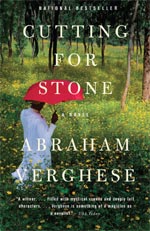
There has been much fanfare over the book Cutting For Stone by Abraham Verghese with just cause. This book runs a big 564 pages and I think I read it in two days. I couldn’t put it down.
It is a sweeping family saga that takes place in both Africa and America and thrills the reader from the first page to the last.
The main characters, twin boys, Marion and Shiva Stone, are born to a beautiful Indian nun and a British surgeon, Thomas Stone. The backdrop is a mission hospital in Addis Ababa, Ethiopia where the boys are connected at birth through a blood vessel in their heads and continue to have an almost supernatural closeness through their lives. Due to their mother’s death and their father’s disappearance, the twins are taken in by loving foster parents who are both doctors and shape the boys’ destinies to become doctors themselves.
With the Ethiopian revolution in the background, the wrongful imprisonment of their foster father, and entanglements with the same woman, the brothers grow increasingly distant until Marion escapes the betrayal of Shiva and flees to America to practice medicine. In America he is almost destroyed by his life-long love but get help from an unlikely source.
This book was riveting and beautifully written. The characters are masterfully developed and I loved the complex relationship between Marion and Shiva. The author is a Professor of Medicine at Stanford University and his knowledge and descriptions of surgery and the medical field which run through the book are fascinating. This is the type of book people talk about and press into their friends and relatives’ hands saying, “you have got to read this!” Cutting For Stone leaves a lasting impression and is a journey well worth taking.
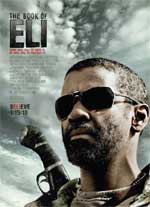
The whole basic premise of The Book of Eli intrigued me. I had seen and heard just enough about this movie to spur my curiosity but not enough to go to the theater and plunk down twenty bucks (it truly is all about the popcorn!). Let’s begin.
The Book of Eli is a reasonably violent post-apocalyptic tale. Loner Eli (an appropriately taciturn and always dignified Denzel Washington) has been on a thirty year journey across a devastated America, armed with a nasty looking sword, a gun and a mysterious book, and an almost otherworldly ability to kick people’s butts. The world has been thrown back into the Dark Ages after a barely discussed war “tore a hole in the sky” with Eli one of a select few who was alive before the catastrophe changed the earth forever. Eli wanders into a dusty town in the middle of nowhere and is thrown into a collision course with the mean through and through, Carnegie (Gary Oldman), who wants to bring civilization back to the world through domination. He has all his minions bringing every book they can find to him in hopes of finding “The Book.”
First things first, it’s no real plot spoiler to reveal that the book Eli is carrying and Carnegie is searching for is the Holy Bible. We eventually find out that after the mysterious war, all of the Bibles were destroyed because they were “what started it all,” obviously suggesting some kind of extreme Christian-Muslim Holy War. Eli is delivering the book to safety…Carnegie wants Eli’s Bible, the last in existence, because he knows that he can use it as a “weapon” to lead people to blindly follow its words and instantly attain power over them. They both understand the power of “The Word.”
If you like action movies you’ll probably love The Book of Eli. Eli appears almost invincible. His lightening quick reflexes are amazing. Here blood flies magnificently and Eli performs extravagant feats of karate, without breaking much of a sweat. He really is righteous in the religious sense but the righteousness is delivered with few words, never sanctimonious. He is a Saint…of sorts. Gary Whitta’s script seems set out to mimic the contours of a religious parable. It has simplicity, sweep, incredible last minute plot twists, mystical happenings and a fundamental belief in Faith, as in the Christian kind.
Early in the movie, when Eli is asked about the way things used to be, he says, “People had more than they needed. They didn’t know what was precious. People kill now for what we threw away then.”
If that isn’t a message, I don’t know what is. Maybe now is a time for us to get leaner, and simplify. Find out what is truly precious.